
What Is Boho? The History and Origins of Bohemian Style
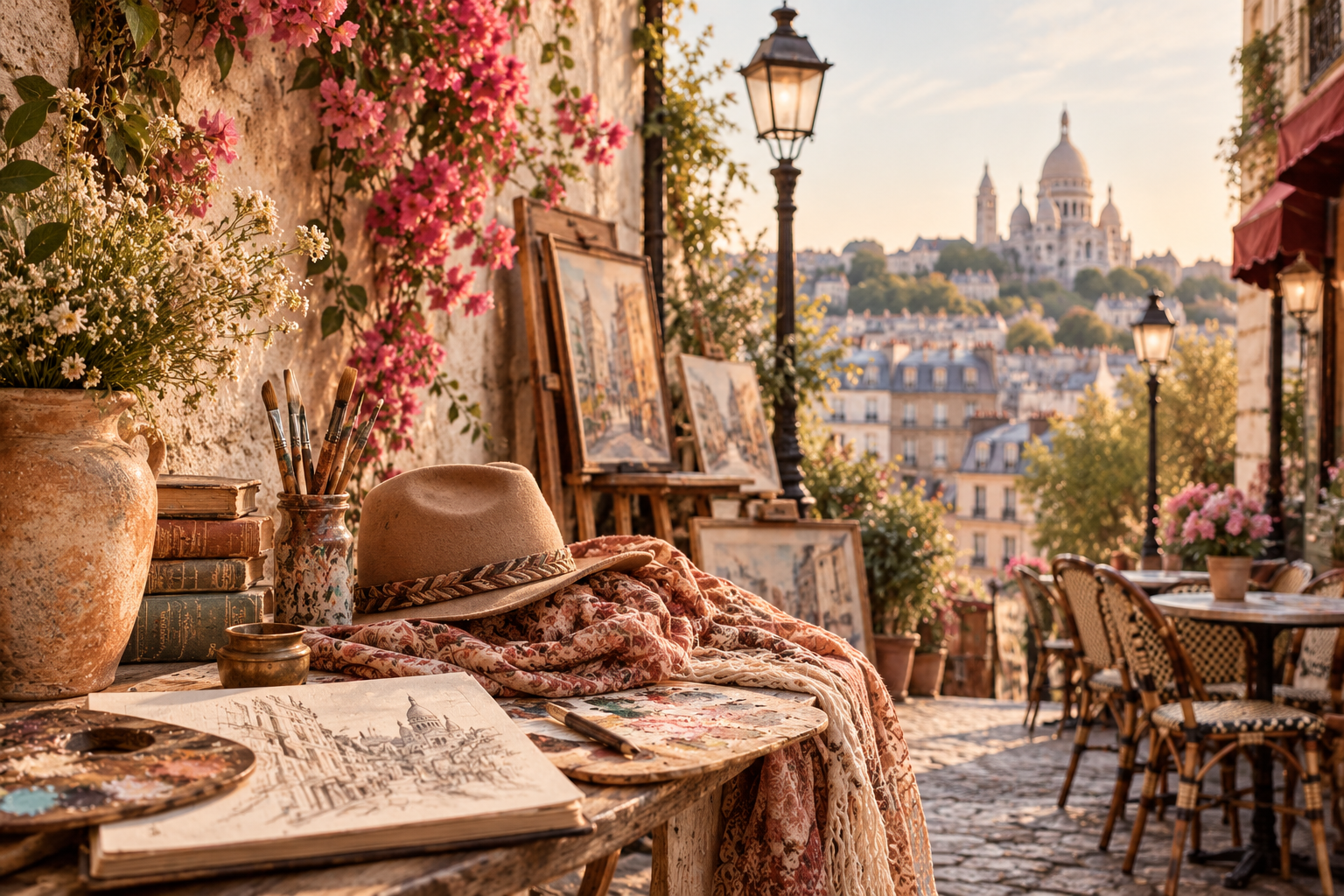
Montmartre, Paris, France, with the Sacré-Cœur Basilica visible in the background
Where did boho come from?
The word bohemian became associated with artists, writers and musicians in nineteenth-century Paris who chose a creative life outside the traditional expectations of society. The idea was captured particularly well in the writing of French author Henri Murger during the 1840s, whose stories portrayed artists living simply while devoting themselves to their creative work.
Parisian neighbourhoods such as Montmartre later became closely associated with this bohemian culture, attracting artists, writers and musicians and becoming known for its cafés, cabarets, studios and unconventional creative scene.
Over time, bohemian became less about a particular group of people and more about an attitude towards life and style — creative, individual and free from rigid rules.
What does boho style look like?
Today, boho style can mean many things, but there are a few familiar details that tend to bring it together.
Think soft fabrics, natural textures, relaxed silhouettes, earthy tones, flowing layers, vintage touches, handmade details and a mix of patterns and materials.
In fashion, that might be a flowing dress, woven bag, embroidered blouse or beautifully layered jewellery.
At home, it could be rattan, linen, timber, woven baskets, textured cushions, ceramics, plants and warm natural colours.
The beauty of boho is that it doesn't need to be perfect or match everything. It's about bringing together pieces that feel personal and creating a space or style that feels relaxed and lived-in.
Boho today
Modern boho has evolved considerably from its nineteenth century origins. You'll now find everything from soft, minimalist boho to more colourful, eclectic interpretations.
And that's part of the appeal.
There really isn't one right way to do boho.
